Orchestration is the step where a theme stops being an idea and becomes a piece of music a group of people can actually play. DeepSound Audio orchestrates every score it writes, and also orchestrates and arranges for other composers and producers who want a stronger finish on their material.
What orchestration adds
A melody on a piano uses one colour. The same melody given to a clarinet over muted strings, doubled an octave below by a cello, becomes a different statement entirely. Orchestration decides which instruments carry the line, which support it, and which stay silent so the others can be heard. It is the difference between a sketch and a score.
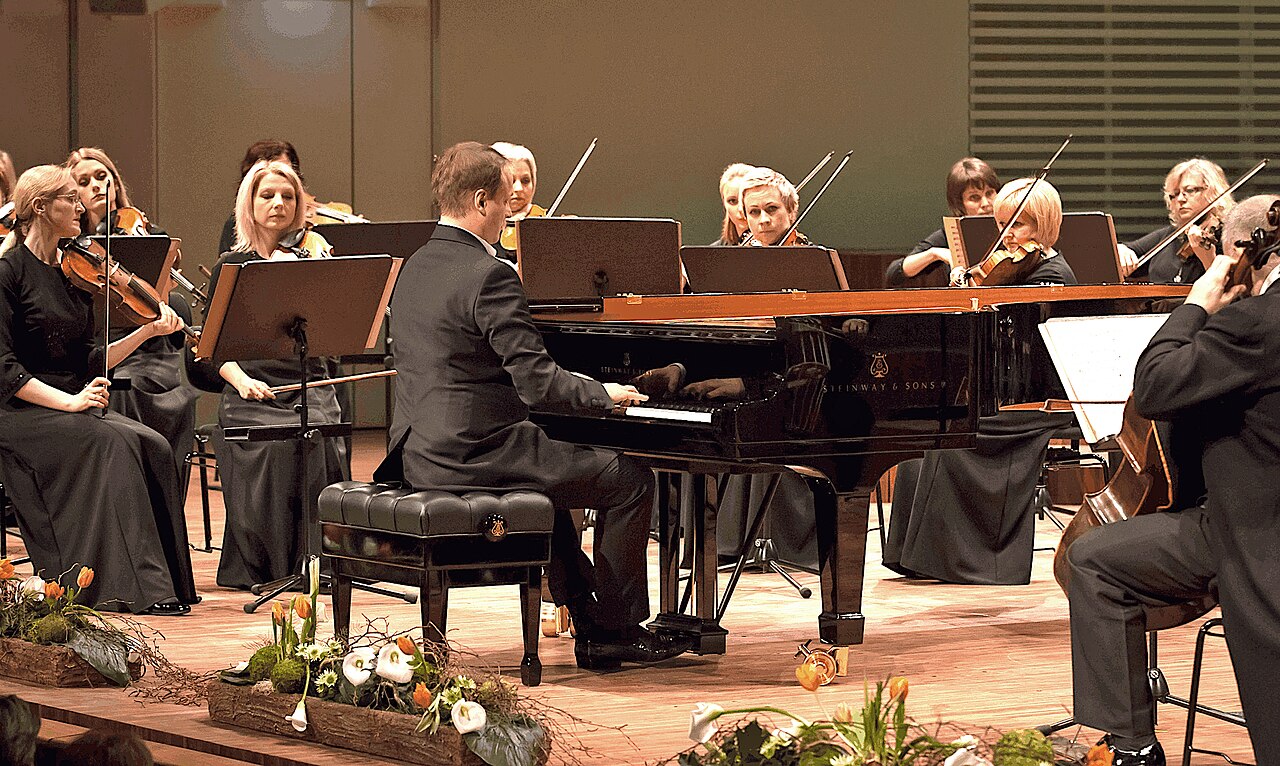
Voicing a small ensemble
A quartet or a sextet is harder to write for than a full orchestra, because there is nowhere to hide. Every instrument is exposed, and the texture has to be complete with four or five parts. We write chamber scores carefully for this reason, treating each player as a soloist with a share of the story.
Writing for the full ensemble
At the other end, a large ensemble gives us depth: families that answer each other, doublings that thicken a climax, and a brass section that can carry a whole movement. We orchestrate to the budget, writing for the sections that can genuinely be recorded well rather than for an imaginary orchestra of ninety.
Arrangement for other writers
Composers and producers often arrive with a theme, a demo or a rough sketch and want it turned into a finished arrangement. We take the material, keep its identity, and build the parts, the transitions and the voicings that make it complete. The writer keeps authorship; the studio supplies the craft to finish it.
Deliverables
- Full score and individual parts, transposed and formatted for the players.
- Session-ready files for the recording day.
- A concise cue map so the engineer knows what each section is answering.
- Revisions if the picture changes after the parts are printed.
Orchestration usually sits between writing the themes and mixing the score; see our process for where it falls in a commission. To have material orchestrated, send a brief.
Serving the melody, not the ensemble
The temptation in orchestration is to add. More doubling, more colour, more instruments answering every phrase until the texture is thick and the idea is buried. We work the other way. The question is always what the melody needs to be heard, and often the answer is that two instruments should stop so a third can speak. Restraint is the harder craft and the more rewarding one.
We also think about who has to play the music. A part that looks elegant on a score but sits awkwardly under the fingers wastes a session, so we write for the instrument in front of a real player, with a nod to what can be read and played well at tempo. Good orchestration is heard; great orchestration is barely noticed because it fits.
Working from another writer's material
When another composer or producer brings a theme to the studio for orchestration, we begin by learning what they hear in it. A sketch of eight bars can carry an intention that a finished score might quietly lose. We keep the writer in the loop, return the material in a form that still sounds like theirs, and leave authorship where it belongs. The studio supplies the craft; the idea stays with the person who had it.
That arrangement suits a range of projects: an independent composer needing a fuller finish for a festival cut, a producer wanting a piece arranged for strings, or a director holding a melody but no way to place it under an orchestra.